

My brother Ray is 74 and spent four years in the Navy as a machinist's mate. I never served. I was too young for the draft and I have never once pretended otherwise. So when I tell you that Band of Brothers by Stephen E. Ambrose is the book I would hand to a veteran before any other, understand what I am and what I am not. I am the man who buys the gift and watches to see whether it gets used.
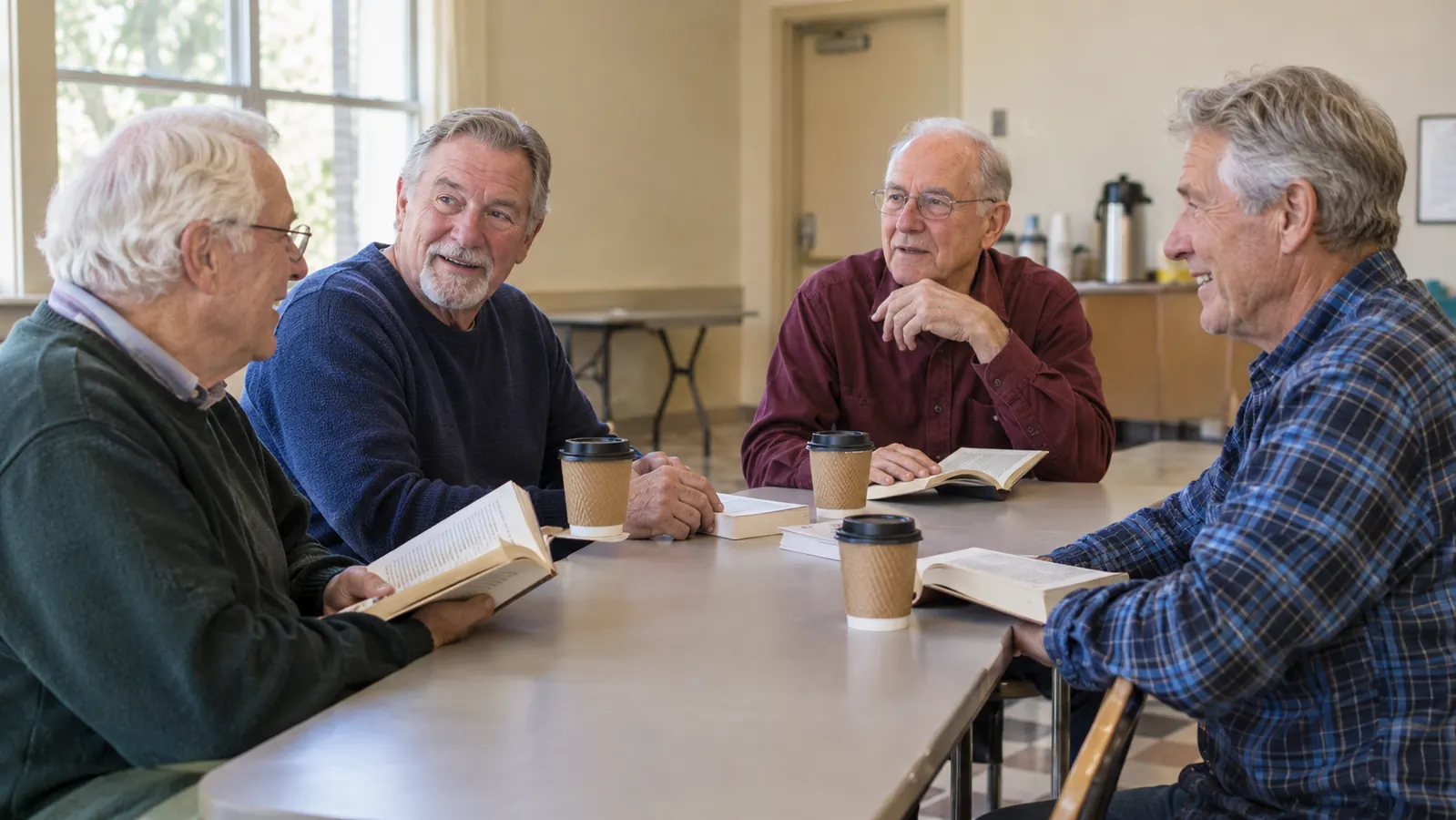
I bought three paperback copies of this book in March, one for me and two to pass around. I read mine over about three weeks. Then it went around the Thursday morning coffee table at the post, four men and no more, and we talked it through from April into June. This is what came out of that, written plainly. If you want the long version of my own read, it is in my full review of the book. This list is the gift argument.
The paperback I read first, then handed to three veterans
336 pages, Simon and Schuster. Easy Company of the 506th Regiment, 101st Airborne, from training through Normandy to the Eagle's Nest. Check today's price before you order a copy for someone.
Amazon Check Today's Price on Amazon →It puts the ordinary man at the center, not the officers
Most war books I have picked up are about commanders and decisions. This one by Stephen E. Ambrose follows a company of ordinary enlisted men, and it stays with them from the training field in Georgia all the way to the end. Ray made the same point twice at coffee: the book is about the men who did the work. For a veteran who spent his years as a machinist's mate rather than an officer, that lands differently than a book about strategy.

It answers the question family members are afraid to ask
Dale, who was in the Marine Corps in the 1980s, said something at the table that stuck with me. He said a book is easier to hand to a son or grandson than a story is. You can put this on the coffee table and let a younger man read what the training was like and what the cold was like, and he comes back with better questions than he left with. That is a gift that keeps working after the wrapping paper is gone.
The chapters are short enough to read in a coffee break
I am 68 and I read in pieces. Twenty minutes in the morning, maybe a chapter at lunch. This book is built for that. A chapter gets its own piece of the story and ends somewhere, so you can set it down without losing the thread. Hank, who put in 20 years in the Air Force as an aircraft mechanic and reads more than the rest of us, finished his copy first, which tells you something.
It gives men who do not talk much something to talk about
Here is the thing about the Thursday table. Four men who have known each other a long time and can go an hour on the weather and a tractor. This book gave them a subject that was not the weather. Nobody had to say anything about themselves. They could say, that chapter about the winter, and the conversation went from there. I have watched a lot of gifts get polite nods. This one got talked about.
It is the rare gift that costs less than a lunch and lasts years
You can spend a great deal on a veteran gift and watch it sit. A paperback is the opposite of that problem. It goes in a coat pocket, in a truck, on a nightstand. Ray kept his in the door pocket of his pickup for two months and it shows, which I take as a good sign rather than a bad one. If the man does not read it, you are out very little. If he does, it stays on his shelf for the rest of his life.
Dick Winters gives a reader a person to follow
There are a lot of names in these pages, and I will be honest that I lost track of some of them. What saves the book is Dick Winters. You can follow him from the first chapters to the last and hold on to him when the rest of the names blur. Hank said the same thing in his own words. A book with one steady man at the middle is easier to finish than a book with fifty equal ones.
It holds up against the miniseries instead of losing to it
Ray owns the DVD set and we watched the whole thing together some years back. So the question at the table was whether the book was worth it when the series already exists. Ray's answer, and mine: the series shows you the winter, the book tells you what the men were thinking in it. Different jobs. If you know a veteran who watched the series and never read the book, that is the easiest gift decision on this list. I wrote the two side by side if you want the longer comparison.
It is a book you can read and then pass on, which is the point
I bought three copies because I wanted to read one without waiting. What happened instead is the copies moved. Ray finished his and handed it to Dale. Dale handed it to Hank. Nobody planned that, and nobody has asked for their copy back. A book that gets passed around a table of four men in a small hall is doing more work than a book on one shelf, and I did not expect to be saying that when I ordered.
Nobody had to say anything about themselves. They could say, that chapter about the winter, and the conversation went from there.
It gives you, the gift giver, something to say
This is the part nobody tells you. You hand a veteran a book about a war and you want to say something and you do not know what. This book gives you a way in that is not about him. You can say, I read this one first, I thought you might like the middle chapters. That is a whole conversation you did not have to force, and it costs you one paperback and three weeks of reading.
It respects the reader enough not to explain him to himself
Stephen E. Ambrose tells the story and lets it sit. There is no chapter telling a veteran what his own experience meant. Ray said he liked that best of anything: nobody in the book was selling him anything about his service. That is not a small thing when you are buying a gift for a man who has had enough people explain things to him. The book just does the work and stops.
What I'd Skip
Three honest cautions before you buy. First, this is a book about combat, and some men do not want to go back there in their reading chair. If you are not sure, ask his wife or his daughter before you order, and do not make it a surprise if it might land wrong. Second, the paperback print is not large, and I found myself holding it further away by the end of an evening. There are larger editions out there if his eyes are worse than mine. Third, there are a great many names and I lost a few of them along the way. That is not a flaw exactly, but it is a real thing, and a man who likes a clean, simple narrative may set it down around the middle.
And one more, the plainest. A book is not a thing every man wants. If the veteran in your life reads, this is easy. If he does not read, no list of ten reasons will change that, and a paperback on his shelf will only make him feel guilty. Buy him the cap or the tumbler instead. I have watched both get used.
Who This Is For
The veteran who reads, or read once and has drifted away from it. The man who watched the miniseries years ago and never picked up the book. The son or grandson who wants a way to ask a question without asking it directly. And the veteran who spent his years in the engine room or the shop rather than on the line, because this book is about the men who did the work rather than the men who ordered it.
One paperback, three weeks of reading, then hand it on
Simon and Schuster, 336 pages, easy to read a chapter at a time. If you are going to give a book to a veteran this year, this is the one I would start with.
Amazon Check Today's Price on Amazon →